
Across Africa, millions of farmers work hard every season, producing food, raising livestock, managing fish ponds, cultivating crops, employing workers, buying inputs, and selling produce. Yet many of these activities remain undocumented, unverified, and invisible to the formal systems that could help them grow.
This invisibility is one of the biggest barriers to agricultural finance.
A farmer may be productive, experienced, and reliable, but without proper records, financial institutions often see risk instead of opportunity. A cooperative may aggregate large volumes of produce, but without structured data, buyers and lenders may struggle to assess its capacity. An agribusiness may have strong market demand, but without operational evidence, it may find it difficult to access working capital, insurance, trade credit, or investment.
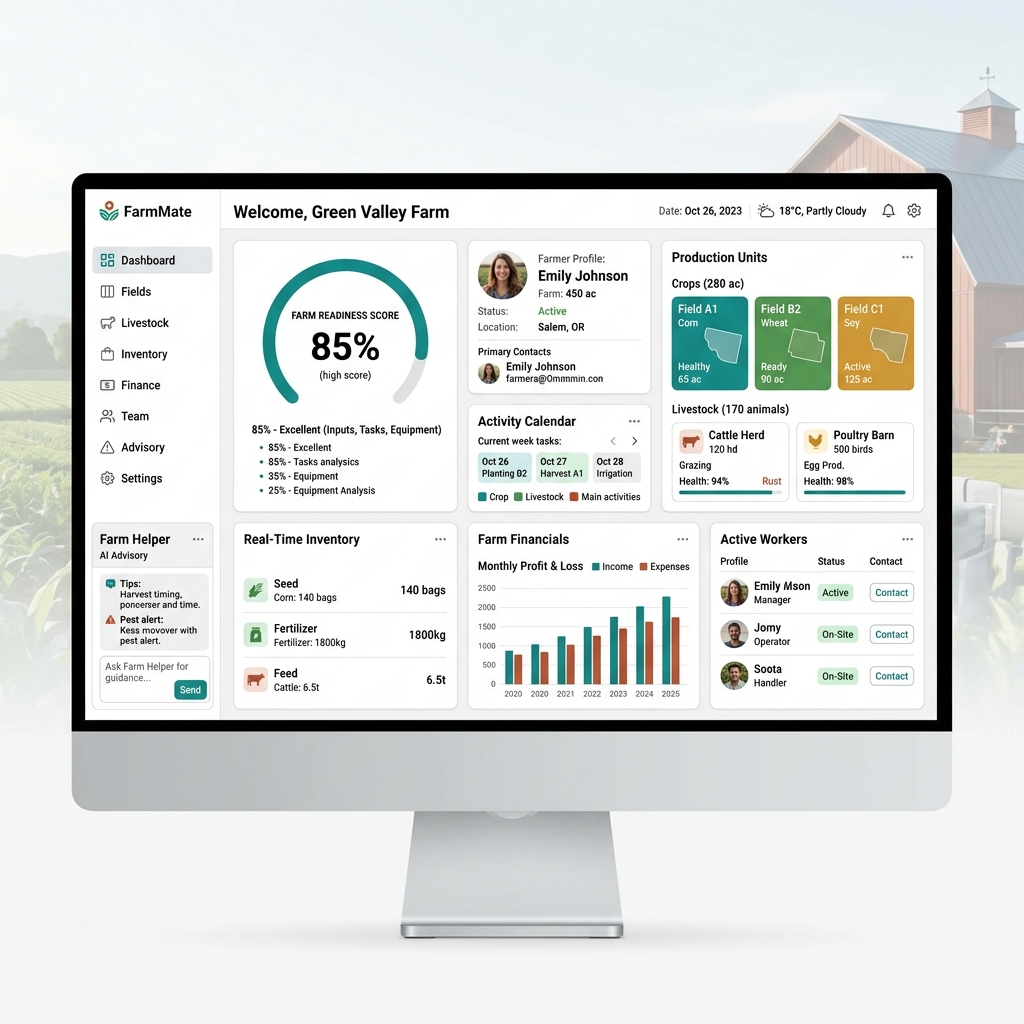
This is why AgricTrail is building FarmMate as more than a farm management tool. FarmMate is the foundation for turning everyday farm activity into trusted agricultural data that can unlock finance, markets, services, and growth.
The Problem: Farmers Are Active, But Their Data Is Missing
Many farmers operate informally. They know their farms, their seasons, their costs, their customers, and their challenges. But much of this knowledge is stored in memory, paper notebooks, WhatsApp messages, or scattered receipts.
As a result, important questions are difficult to answer:
- How much did the farmer spend on inputs?
- What was produced last season?
- What is the size and type of the farm enterprise?
- How many workers are involved?
- What sales were completed?
- What losses occurred?
- What repayment capacity does the farmer have?
- What support does the farmer actually need?
When this information is not properly captured, farmers remain excluded from many opportunities. Financial institutions cannot easily assess them. Buyers cannot easily trust supply capacity. Governments and NGOs cannot accurately measure support needs. Cooperatives cannot fully understand member productivity.
The farmer is working, but the system cannot see the work clearly.
FarmMate: Turning Farm Activity into Structured Records
FarmMate is AgricTrail's farm operating system for farmers. It helps farmers record and manage their farm activities in a structured way.
Through FarmMate, a farmer can capture key farm information such as farm profile, enterprises, production units, stocking, planting, feeding, input use, inventory, labour, expenses, sales, and farm performance. These records help move farmers from informal farm management to organized farm intelligence.
This matters because farm data is not only useful for the farmer. It also becomes the evidence layer that connects the farmer to the wider agricultural ecosystem.
A farm record is not just a note.
It can become proof of production.
It can become proof of activity.
It can become proof of income.
It can become proof of repayment capacity.
It can become proof of readiness for finance, insurance, trade, and support programs.
Why Financial Institutions Need Better Farm Data
Agricultural finance is difficult because agriculture carries real risks: weather, disease, price fluctuation, input costs, logistics challenges, poor market access, and production uncertainty.
But one major reason finance remains limited is the absence of trusted data.
Banks, microfinance institutions, cooperatives, insurers, investors, and development finance partners need evidence before they can provide capital. They need to understand who the farmer is, what the farmer produces, how the farm performs, what risks exist, and whether there is a realistic path to repayment.
Without data, lenders may rely only on collateral, informal judgment, or general assumptions about agriculture. This often excludes many farmers who are productive but undocumented.
FarmMate helps reduce this information gap.
By capturing structured farm records over time, AgricTrail can support better credit readiness, risk assessment, insurance profiling, input financing, working capital decisions, and cooperative lending models.
From Records to Credit Readiness
A farmer's financial story should not begin only when they apply for a loan. It should begin from their daily farm activity.
Every input purchased, every pond stocked, every crop planted, every harvest recorded, every sale completed, and every repayment made can contribute to a stronger profile.
With AgricTrail, farm data can help build a farmer's credit readiness by showing:
- Production history
- Farm enterprise type and scale
- Input use and operating costs
- Sales and income patterns
- Inventory and asset records
- Cooperative membership and validation
- Market participation
- Training and advisory participation
- Repayment and transaction behaviour
Over time, these records can help create a clearer picture of the farmer's capacity, discipline, and growth potential.
This does not remove risk from agriculture, but it makes risk easier to understand, price, manage, and support.
Finance Should Follow Real Agricultural Activity
AgricTrail believes agricultural finance should be connected to real agricultural activity.
Instead of lending blindly, finance providers should be able to support farmers based on verified farm profiles, production plans, cooperative validation, transaction records, and market opportunities.
This can support different types of agricultural finance, including input credit, seasonal working capital, equipment finance, insurance, offtake-linked finance, warehouse receipt finance, cooperative loans, and agribusiness trade finance.
For example, a farmer with verified production records and a confirmed buyer may be more finance-ready than a farmer with no records. A cooperative with aggregated member data may be better positioned to negotiate input financing. A processor with visible supply relationships may be better prepared to access working capital.
Data helps finance move closer to the realities of production and trade.
Building Trust Between Farmers and Finance Providers
Trust is central to agricultural finance.
Farmers need to trust that finance providers understand their realities. Finance providers need to trust that farmers and cooperatives can use funds productively and repay responsibly.
AgricTrail helps build this trust by creating a shared evidence layer.
When farm activities are recorded, cooperative membership is verified, production data is structured, sales are captured, and transactions are linked to identity, the relationship between farmers and finance providers becomes stronger.
This creates room for better financial products, fairer risk assessment, stronger repayment planning, and more inclusive access.
The goal is not to turn farmers into paperwork managers. The goal is to help their everyday work speak for them.
The Role of A-ID in Financial Inclusion
At the centre of AgricTrail's ecosystem is the AgricTrail ID, known as A-ID.
A-ID gives farmers, cooperatives, agribusinesses, and other ecosystem actors a digital identity that can be connected to their records, activities, transactions, services, and impact profile.
For finance, identity matters because it links data to the right person, farm, cooperative, or business. It helps reduce duplication, improves verification, and supports accountability.
A farmer with an A-ID can gradually build a digital agricultural profile. This profile can become useful for credit readiness, insurance eligibility, input financing, market participation, program support, and long-term financial inclusion.
Cooperatives as Data and Finance Bridges
Cooperatives are critical to making farm data useful at scale.
Many individual farmers may struggle to access finance alone. But through cooperatives, farmers can be organized, validated, trained, aggregated, and supported. Cooperatives can help confirm membership, coordinate production, monitor activity, aggregate demand for inputs, and strengthen repayment discipline.
AgricTrail's cooperative infrastructure allows farmer data to move beyond individual records into structured group intelligence.
This can help cooperatives become stronger financial bridges between farmers and banks, microfinance institutions, development partners, input suppliers, buyers, and insurers.
A cooperative with reliable data is not just a social organization. It becomes an economic platform.
Farm Data Also Supports Markets and Insurance
Farm data does not only matter for loans.
It also matters for market access and insurance.
Buyers want reliable supply. Processors need to plan raw material sourcing. Exporters need traceability and compliance information. Insurers need risk data. Governments need production intelligence. NGOs need impact evidence.
FarmMate helps create the foundation for these connections.
When farmers record production, location, enterprise type, output, and transactions, they become more visible to buyers and service providers. When activity is documented over time, insurance products can be better designed. When cooperatives aggregate member data, market opportunities can be structured more effectively.
Finance becomes stronger when it is connected to markets, services, and verified production.
From FarmMate to Finance: The AgricTrail Pathway
The journey from FarmMate to finance follows a simple logic:
- The farmer creates an AgricTrail identity.
- The farmer records farm activities through FarmMate.
- The farm profile becomes more complete.
- The farmer's production and transaction history becomes clearer.
- The cooperative can validate and support the farmer.
- Buyers and service providers can engage with better information.
- Finance providers can assess credit readiness with stronger evidence.
- Over time, the farmer becomes more visible, more trusted, and more financially included.
This is the pathway AgricTrail is building.
Why This Matters for Africa's Food System
Africa cannot build a stronger food system if farmers remain financially invisible.
Farmers need capital to buy quality inputs, improve productivity, adopt technology, reduce losses, expand production, process produce, and reach better markets. But capital cannot flow efficiently where data is missing.
By turning farm activity into structured intelligence, AgricTrail is helping create a new foundation for agricultural finance.
This foundation can support farmers, cooperatives, agribusinesses, financial institutions, governments, NGOs, and investors. It can help reduce risk, improve planning, unlock credit, strengthen supply chains, and support more inclusive agricultural growth.
Conclusion
Farm data matters because it gives visibility to the work farmers are already doing.
It turns activity into evidence.
It turns evidence into trust.
It turns trust into finance.
And when finance reaches the right farmers, cooperatives, and agribusinesses, agriculture becomes more productive, more resilient, and more inclusive.
FarmMate is not just helping farmers keep records. It is helping build the data foundation for agricultural finance, trade, insurance, and long-term growth.
From FarmMate to finance, AgricTrail is creating the digital backbone that allows African agriculture to be seen, trusted, funded, and scaled.
AgricTrail — Connect. Grow. Sustain.