
Digital and Physical Hubs for
Aggregation, Inputs, Storage, Logistics, Finance and Market Access
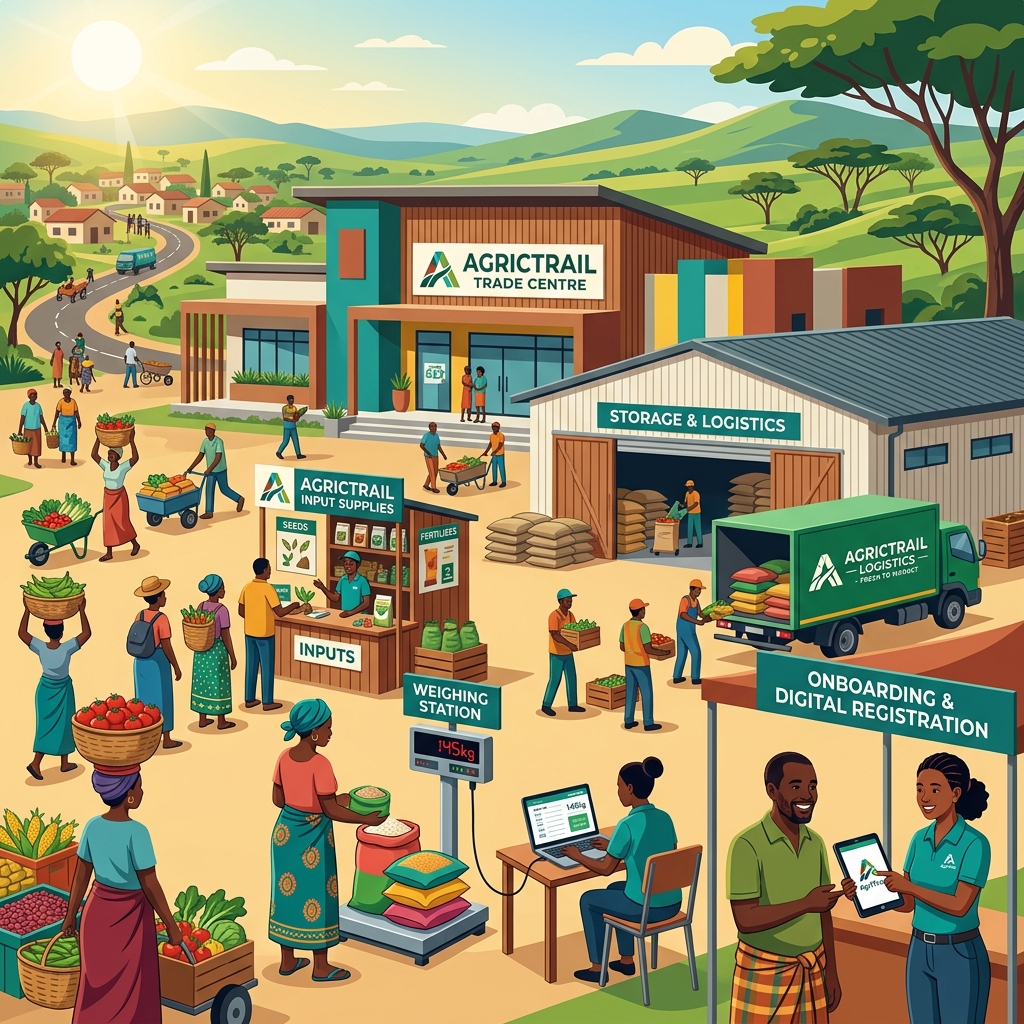
AgricTrail® Trade Centres are local agricultural coordination hubs that connect farmers, cooperatives, suppliers, buyers, logistics providers, processors, financial institutions, NGOs and government programs.
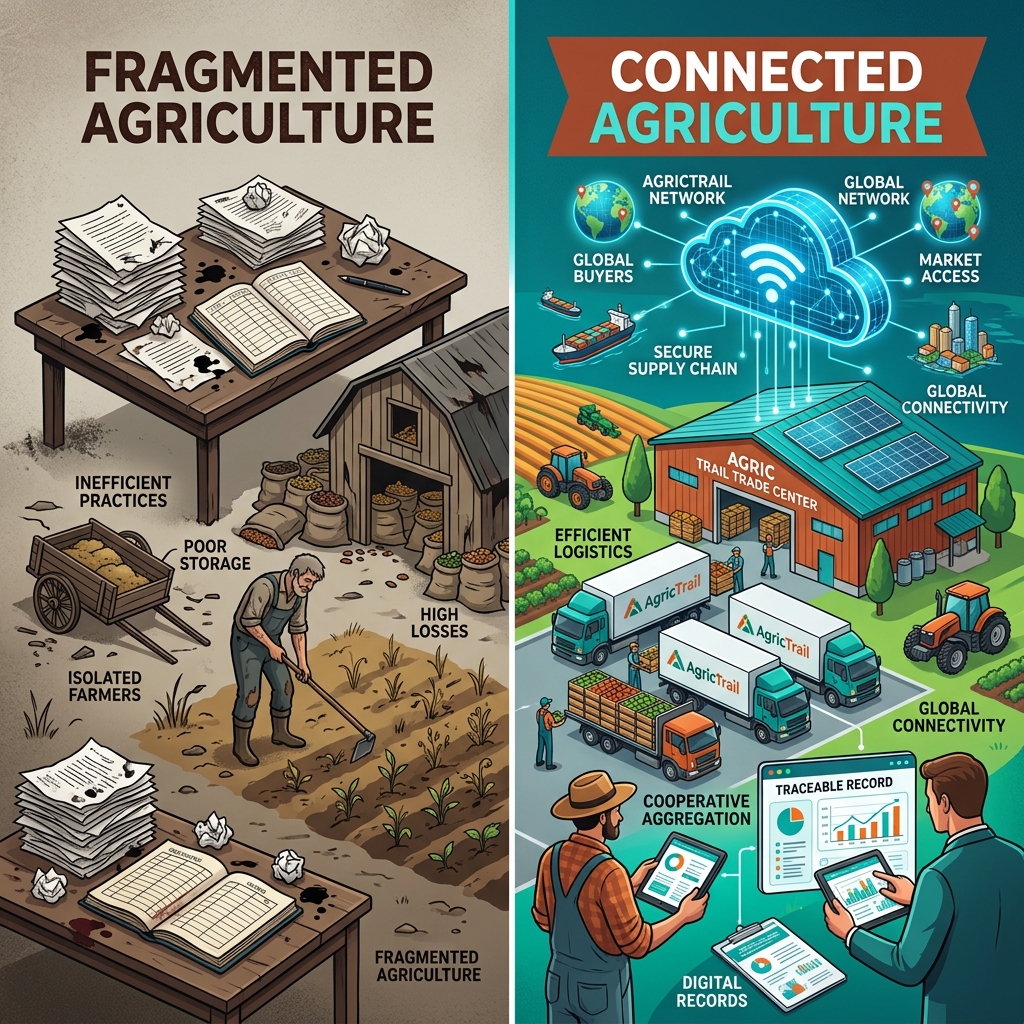
By combining AgricTrail’s digital platform with local trade-centre operations, farmers and agribusinesses can move from fragmented activity to structured production, aggregation, services, finance and market access.
What Is an AgricTrail Trade Centre?
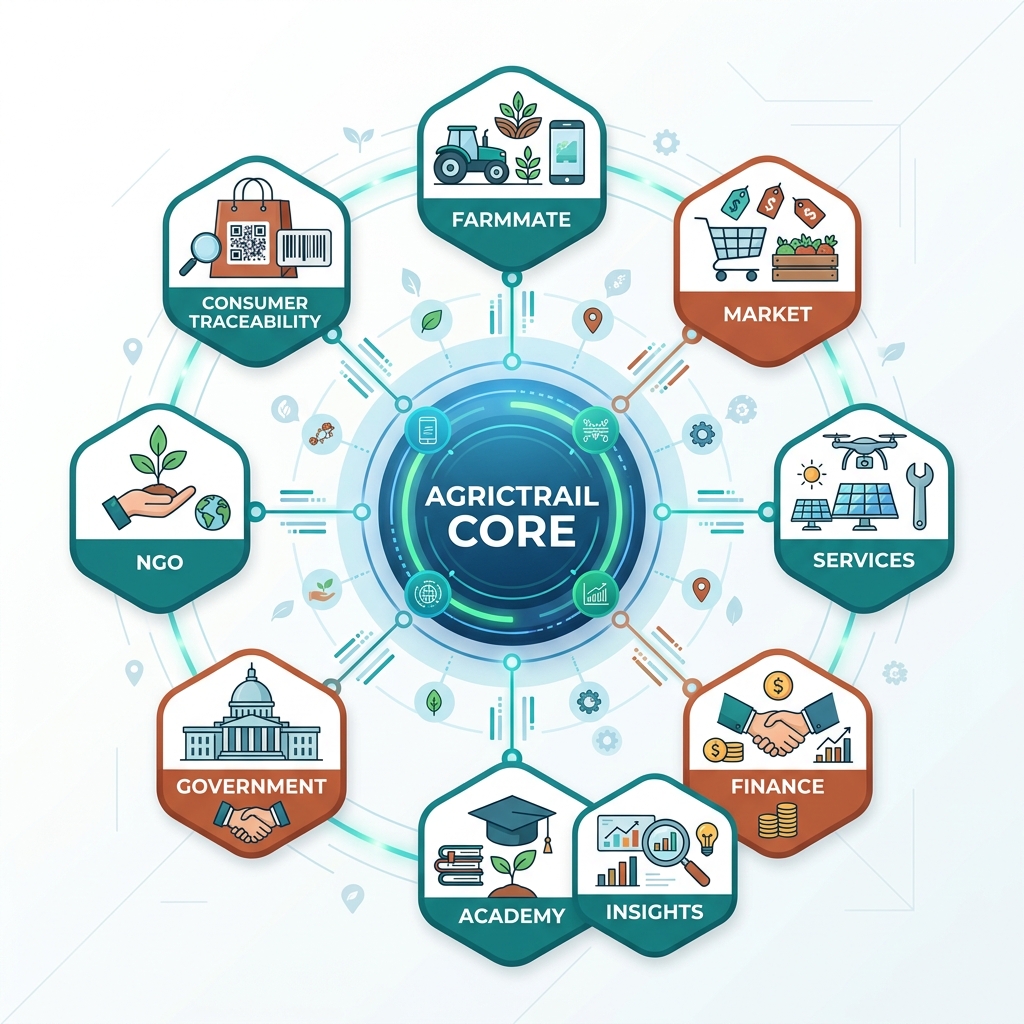
Hub Connections
Solving the Last-Mile Agriculture Gap
What Happens at an AgricTrail Trade Centre?
Each Trade Centre supports practical agricultural activities that help farmers, cooperatives, agribusinesses and institutions work together more efficiently.
Farmer Onboarding
Farmers are registered into the AgricTrail ecosystem and introduced to FarmMate, A-ID, farm profiling and available services.
A-ID Registration
Farmers, cooperatives and agribusinesses can create or update their AgricTrail ID for better visibility and platform access.
Farm Profiling
Farm location, enterprise type, production units, activities, farm size and readiness information can be captured.
Input Distribution
Seeds, feed, fertilizer, chemicals, tools, equipment and other agricultural inputs can be coordinated through verified suppliers.
Produce Aggregation
Farm produce can be collected, graded, weighed, documented and prepared for buyers, processors or storage.
Storage & Warehouse Support
Where available, storage and warehouse receipt support can help farmers and aggregators reduce distress sales and improve trade readiness.
Logistics Coordination
Transport providers can be connected to farmers, cooperatives, buyers, processors and warehouses.
Buyer Matching
Verified buyers, aggregators, processors, exporters and retailers can be connected to available produce and supply clusters.
Finance & Insurance Support
Farmers and cooperatives can build finance readiness through digital records, production history, cooperative data and trade activity.
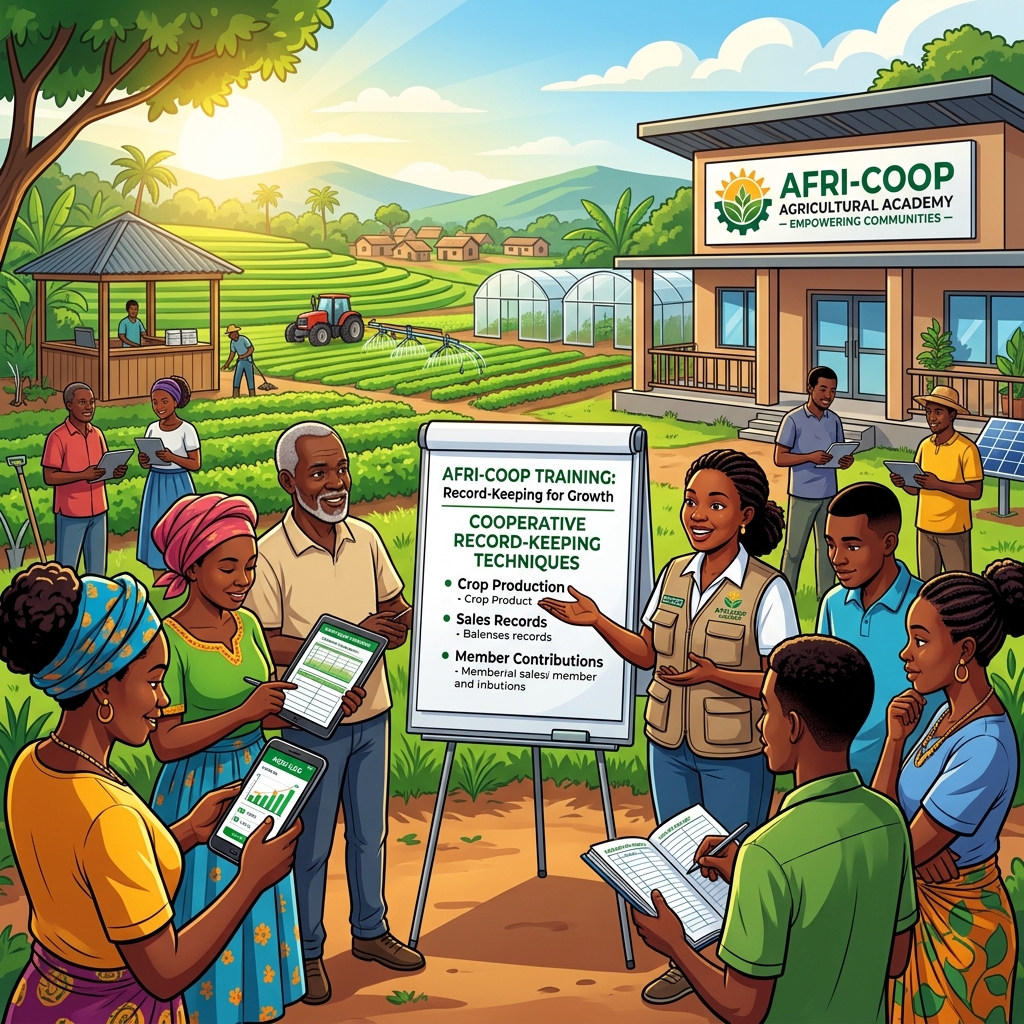
Training and Extension
Farmers, youth, women, cooperatives and field agents can receive practical training through AgricTrail Academy.
Traceability Documentation
Produce movement, batch records, farm origin and handling information can be documented to support traceability and buyer confidence.
Who Uses AgricTrail Trade Centres?
AgricTrail Trade Centres are designed for the full agricultural value chain.
Farmers
Access registration, farm profiling, inputs, advisory, aggregation, buyers, finance readiness and training.
Cooperatives
Coordinate members, aggregate produce, manage input demand, connect to buyers and support member finance readiness.
Aggregators
Source produce from verified farmers and cooperatives through structured aggregation channels.
Processors
Connect to more reliable supply, traceable batches and organized produce clusters.
Exporters
Access structured supply, documentation support, quality visibility and traceability pathways.
Input Suppliers
Reach farmers and cooperatives through verified demand, quote requests and local distribution channels.
Logistics Providers
Connect with produce movement, input delivery, storage movement and buyer fulfillment opportunities.
Banks & Finance Partners
Use farmer, cooperative and trade data to support finance readiness, credit, insurance and repayment tracking.
NGOs & Development Partners
Implement, monitor and report agricultural programs using verified beneficiary and field data.
Government Programs
Support farmer visibility, subsidy delivery, program monitoring, food security planning and agricultural policy execution.
Every Trade Centre Is Powered by AgricTrail’s Digital Platform
Pilot Focus: Epe, Lagos
From Local Pilot to Pan-African Trade Infrastructure
AgricTrail Trade Centres are designed to be replicable. The goal is to begin with a strong local pilot, refine the model, document the operating system and expand through partnerships with cooperatives, investors, governments, NGOs, agribusinesses and local operators.
Pilot Trade Centre
Test the model in one strong agricultural community.
LGA Network
Expand to multiple local government areas through farmer clusters and cooperative structures.
State Network
Coordinate aggregation, input access, logistics and program data across state-level agricultural systems.
National Network
Connect farmers, cooperatives, agribusinesses, finance partners and government programs across the country.
Pan-African Model
Replicate the AgricTrail Trade Centre framework across African markets through country portals and local partnerships.
Partner to Launch or Power a Trade Centre