
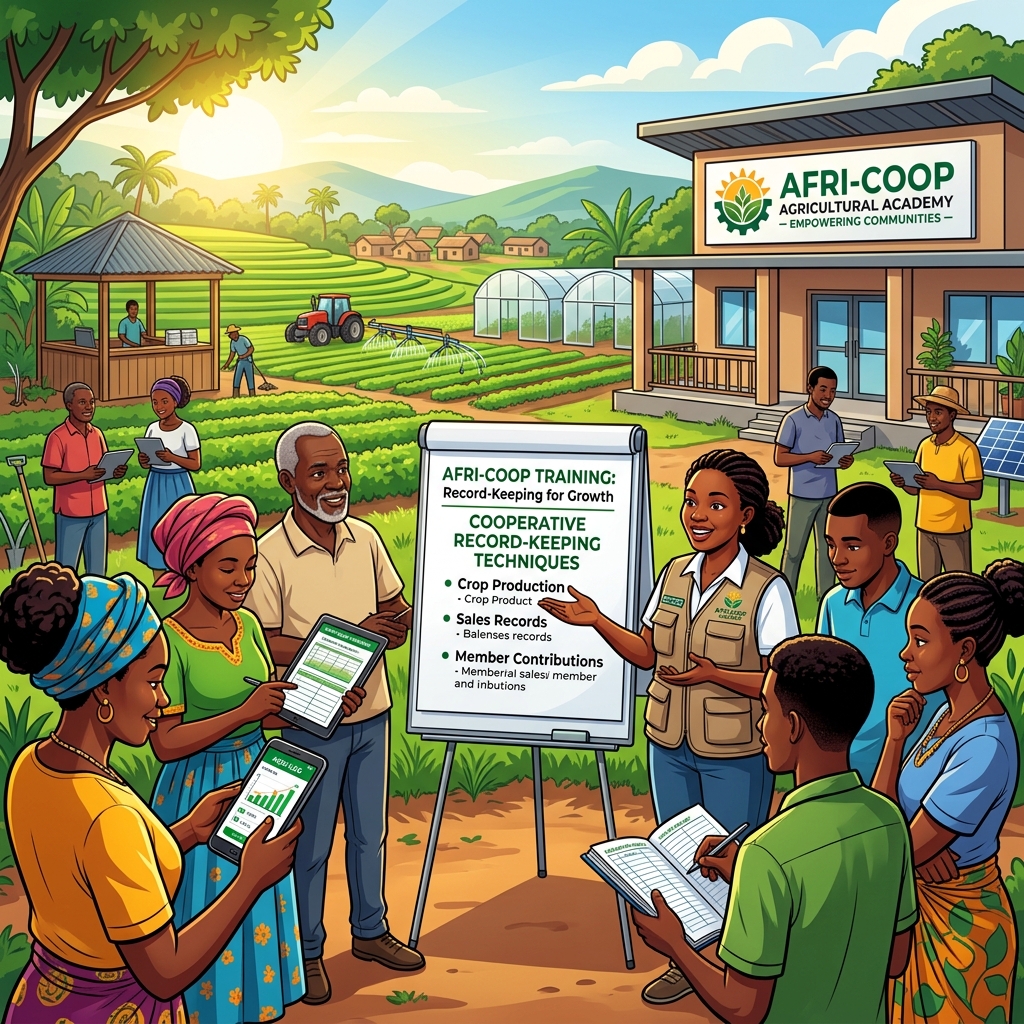
Agriculture is one of Africa's greatest opportunities for inclusive growth. It has the power to create jobs, build local economies, improve food security, support trade, and unlock prosperity across rural and urban communities.
Yet two groups remain deeply under-supported in the agricultural economy: youth and women.
Young people often see agriculture as difficult, informal, poorly financed, and disconnected from modern opportunity. Women contribute significantly to farming, processing, trading, food preparation, and household food security, yet many still face barriers to land, finance, technology, training, markets, and decision-making power.
AgricTrail is being built to change this.
By connecting digital identity, farm management, cooperative coordination, market access, finance readiness, training, traceability, services, and Trade Centres, AgricTrail creates practical pathways for youth and women to participate more visibly and profitably in agriculture.
Why Youth and Women Matter
Africa's food system cannot grow sustainably without youth and women.
Young people bring energy, technology adoption, innovation, creativity, and entrepreneurial ambition. They can become farmers, agribusiness owners, service providers, logistics operators, processors, data agents, extension workers, equipment operators, cooperative leaders, and digital marketplace participants.
Women are already central to agriculture and food systems. They farm, process, trade, manage households, support nutrition, organize communities, and sustain local food markets. But their contribution is often informal, under-recorded, and undervalued.
AgricTrail believes that youth and women should not remain at the edge of agricultural transformation. They should be at the centre of it.
Making Youth and Women Visible Through A-ID
One of the biggest barriers to inclusion is invisibility.
Many young farmers, women farmers, processors, traders, and agribusiness operators are active, but they are not properly documented in systems that can connect them to finance, buyers, support programs, training, or government opportunities.
AgricTrail ID, known as A-ID, helps solve this problem.
A-ID gives youth and women a digital agricultural identity that can be connected to their farm records, cooperative membership, enterprise activity, training, transactions, services, and impact profile.
This matters because visibility creates opportunity. When a young farmer or woman agripreneur can be identified and verified, they become easier to support, finance, train, insure, and connect to markets.
FarmMate as a Tool for Empowerment
FarmMate is AgricTrail's farm operating tool designed to help farmers manage their activities more clearly.
For youth, FarmMate makes agriculture more structured, digital, and data-driven. It helps farming feel less like guesswork and more like a modern enterprise. Young people can use FarmMate to track farm activities, production units, expenses, inventory, workers, sales, and performance.
For women, FarmMate can help turn daily agricultural work into visible records. Whether managing crops, livestock, aquaculture, processing, or small agribusiness activities, women can use farm data to build stronger profiles for finance, cooperative participation, and market access.
The goal is simple: help farmers and agripreneurs move from informal activity to organized agricultural enterprise.
Access to Training and Practical Knowledge
Many youth and women need access to practical agricultural training, business education, digital skills, financial literacy, and market information.
AgricTrail supports this through its learning and advisory infrastructure.
Through AgricTrail Academy and advisory support, youth and women can access knowledge that helps them improve productivity, manage farms better, understand markets, prepare for finance, adopt climate-smart practices, and build stronger agribusinesses.
Training is not only about farming techniques. It is also about helping participants understand records, pricing, budgeting, cooperative participation, quality standards, traceability, and business growth.
This helps youth and women move from participation to leadership.
Strengthening Cooperative Participation
Cooperatives are one of the most important structures for inclusion.
Many youth and women cannot access markets, inputs, finance, or services alone. But through cooperatives, they can become part of a stronger economic group.
AgricTrail's cooperative infrastructure helps onboard members, verify participation, link farms, coordinate production, track aggregation, support governance, and connect members to markets and programs.
This creates an opportunity for youth and women to become more visible within cooperatives and to participate in leadership, production planning, aggregation, processing, and trade.
A cooperative that properly captures youth and women participation can also attract stronger support from governments, NGOs, donors, and finance providers.
Opening New Jobs Beyond Farming
Agriculture is not only about owning a farm.
The modern agricultural economy needs many roles across the value chain. AgricTrail creates opportunities for youth and women to participate as:
- Digital onboarding agents
- Farm data officers
- Cooperative coordinators
- Input distribution partners
- Aggregation centre workers
- Quality control assistants
- Mini-processing operators
- Logistics coordinators
- Marketplace vendors
- Traceability agents
- Extension support workers
- Agricultural service providers
- Trade Centre operators
This is important because not every young person or woman needs to start with land ownership. Many can enter agriculture through services, technology, processing, trade, logistics, data, and cooperative support. AgricTrail's ecosystem creates space for these roles to grow.
Connecting Women and Youth to Markets
Market access remains one of the biggest challenges for small farmers, women-led agribusinesses, and youth entrepreneurs.
Many produce or process goods but struggle to find reliable buyers, negotiate fair prices, meet volume requirements, or reach formal markets.
AgricTrail helps address this through digital marketplace infrastructure, cooperative aggregation, and Trade Centres.
Youth and women can become visible to buyers, processors, retailers, aggregators, exporters, and institutional purchasers. Cooperatives can aggregate their produce. Trade Centres can support storage, processing, quality control, logistics, and market linkage.
This helps youth and women move from scattered selling to structured market participation.
Improving Access to Finance
Finance is one of the strongest barriers facing youth and women in agriculture.
Many lack collateral, formal business records, credit history, or recognized ownership structures. This makes it difficult to access loans, input credit, insurance, working capital, equipment finance, or investment support.
AgricTrail helps build a better pathway to finance by connecting identity, farm records, cooperative validation, transaction history, production activity, and market participation.
A young farmer using FarmMate can gradually build a data profile. A woman processor selling through AgricTrail can create transaction evidence. A cooperative with strong youth and women participation can generate group-level records that support finance readiness.
This does not make finance automatic, but it makes youth and women more visible, credible, and assessable.
Supporting Women-Led Agribusinesses
Women are active across production, processing, trading, food retail, and value addition. However, many women-led agribusinesses remain informal and under-supported.
AgricTrail can help women-led agribusinesses build stronger digital profiles, access markets, record transactions, manage inventory, connect with suppliers, participate in traceability systems, and become more finance-ready.
For women processors, traders, input retailers, cooperative leaders, and service providers, AgricTrail creates a pathway to formal recognition and business growth.
The more visible a business becomes, the easier it is to support, partner with, and finance.
Reducing Barriers Through Digital and Physical Access
Digital tools are powerful, but agriculture also needs physical support.
This is why AgricTrail combines the platform with Trade Centres.
Trade Centres can provide local access points where youth and women can receive training, bring produce, access inputs, participate in aggregation, work in processing units, connect to buyers, and engage with support services.
This is especially important for people who may not have easy access to large markets, formal offices, or distant institutions.
The combination of digital platform and physical hub makes inclusion more practical.
Helping Governments and NGOs Target Inclusion Better
Governments, NGOs, donors, and development partners often want to support youth and women in agriculture, but they need accurate data to identify participants, measure outcomes, and track impact.
AgricTrail's data and impact intelligence can help show how many youth and women are registered, what value chains they participate in, what support they receive, how their productivity changes, what markets they access, and what income opportunities are created.
This makes inclusion programs more transparent and measurable.
It also helps ensure that support reaches the people it is meant to serve.
Building Confidence and Leadership
Inclusion is not only about access. It is also about confidence and leadership.
When youth and women can see their data, manage their activities, participate in cooperatives, access training, connect to buyers, and build financial records, they gain stronger confidence in agriculture as a serious economic pathway.
AgricTrail helps position agriculture as a modern, organized, and opportunity-driven sector.
This can encourage more young people to see agriculture as a business, not a last resort.
It can also help more women move from informal participation to recognized leadership in farms, cooperatives, agribusinesses, and local food systems.
Why This Matters for Africa
Africa's agricultural future depends on inclusion.
If youth are left out, agriculture loses innovation, energy, and future leadership. If women are left out, food systems lose productivity, resilience, and community strength.
But when youth and women are included, agriculture becomes stronger. Families benefit. Communities benefit. Markets benefit. Food security improves. Rural economies grow.
AgricTrail is building with this belief: agricultural transformation must create opportunity for those who have historically been underserved but remain central to the food system.
Conclusion
AgricTrail supports youth and women in agriculture by making them visible, connected, trained, market-ready, finance-ready, and included in the wider agricultural economy.
Through A-ID, FarmMate, cooperatives, marketplace tools, Trade Centres, traceability, finance readiness, and impact intelligence, AgricTrail creates pathways for youth and women to participate more fully in agriculture.
The goal is not only to help them farm. The goal is to help them build businesses, access services, lead cooperatives, create jobs, supply markets, attract finance, and contribute to stronger food systems.
When youth and women are empowered, agriculture becomes more innovative, inclusive, and resilient.
That is the future AgricTrail is working to build.
AgricTrail — Connect. Grow. Sustain.